
How to keep your home language alive when daycare starts
Expect the switch, and plan for it. Once daycare or school starts, the community language gets most of your child's waking hours and all of their friends, so the home language needs its own time, its own people and its own reasons to exist.
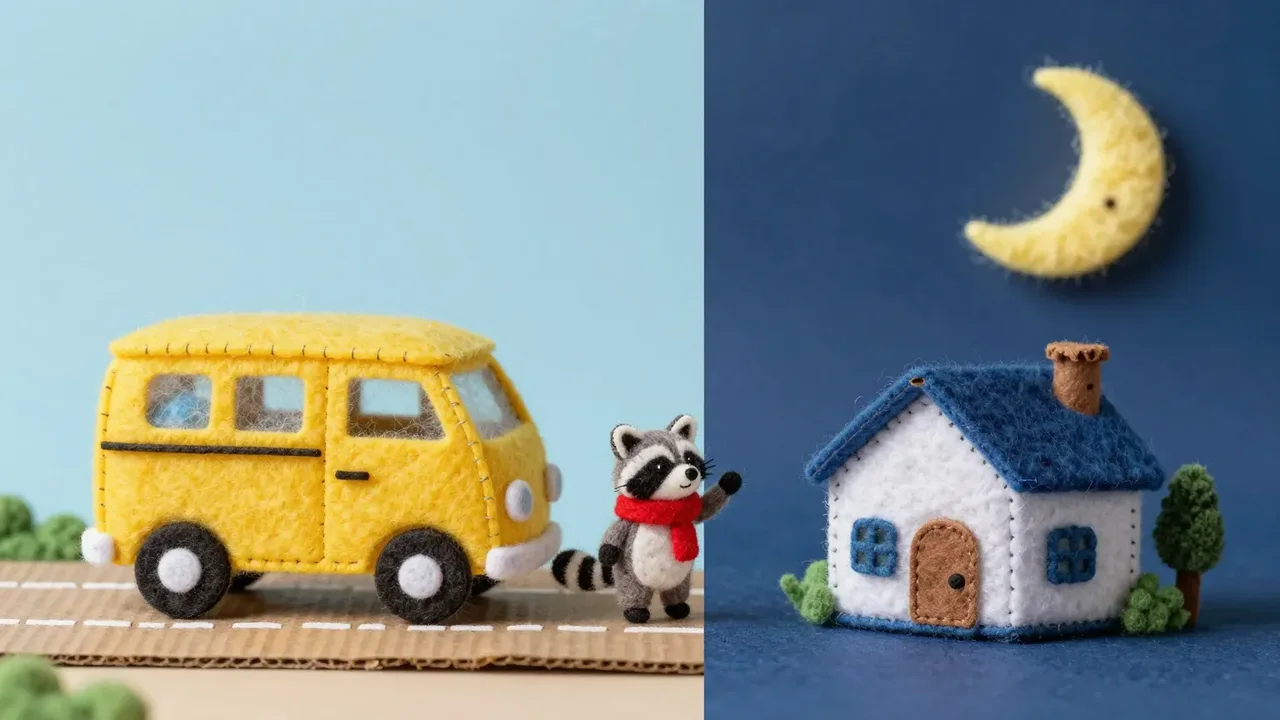
Lots of parents notice it within months: a kid who chatted happily in Portuguese starts answering in German, or comes home with English songs and quietly drops the Spanish ones. It's common, and very fixable, especially in the toddler and preschool years.
Why the community language takes over
It's mostly arithmetic. Nine hours a day in one language beats two in another, and the language of other kids carries extra weight because it's the language of play. In De Houwer's survey of 1,899 families in Flanders, every child spoke the community language, while far fewer spoke the language their parents brought from elsewhere. The kids most likely to keep it were the ones whose parents both used it at home, which Grosjean's summary of the study puts at close to all of them.
The slide is slow, which makes it easy to miss. A study that followed 147 children of Spanish-speaking families in Florida from age 3½ to 12 found that the share of Spanish they heard at home fell from about two thirds to about half, and their English vocabulary grew far faster than their Spanish. Children who heard more Spanish early kept growing faster in Spanish, and the authors' conclusion is right there in their title, early experience is not enough: the home language kept depending on home exposure all the way to age 12 (Johnson and Hoff, 2026).
If you worry that protecting the home language will hold back the local one, a review of 42 studies found no case where more heritage-language exposure hindered children's majority language (Hollebeke and colleagues, 2020).
If both of you speak the home language, the strongest single move is making it the language of the house and trusting daycare with the rest. If only one of you does, that parent's time gets precious, and the other parent can still help by learning songs, playing along and never treating it like a secret language.
Watch what big brothers and sisters bring home
Older siblings are the other quiet force. In families where a school-aged sibling went to an English-only school, that sibling spoke mostly English to the toddler, the mother used more English too, and the toddlers ended up relatively stronger in English and weaker in Spanish than toddlers without school-aged siblings, with the same total vocabulary across both languages (Bridges and Hoff, 2014). A major review of heritage-language research cautions against nudging siblings to speak the community language at home to help the little one, since the community language gets plenty of practice elsewhere (Paradis, 2023).
Nobody wants to police sibling chatter, so give the big kid a job in the home language instead: reading to the little one, leading the bedtime song, being the one who knows the game in Italian.
Give the language its own moments
Routines work because they don't run on willpower. Pick a few moments that always happen in the home language and protect them: the bedtime story, the bath song, Saturday breakfast, the walk to the playground. Kids come to expect the language there, and it starts to feel like part of the moment.
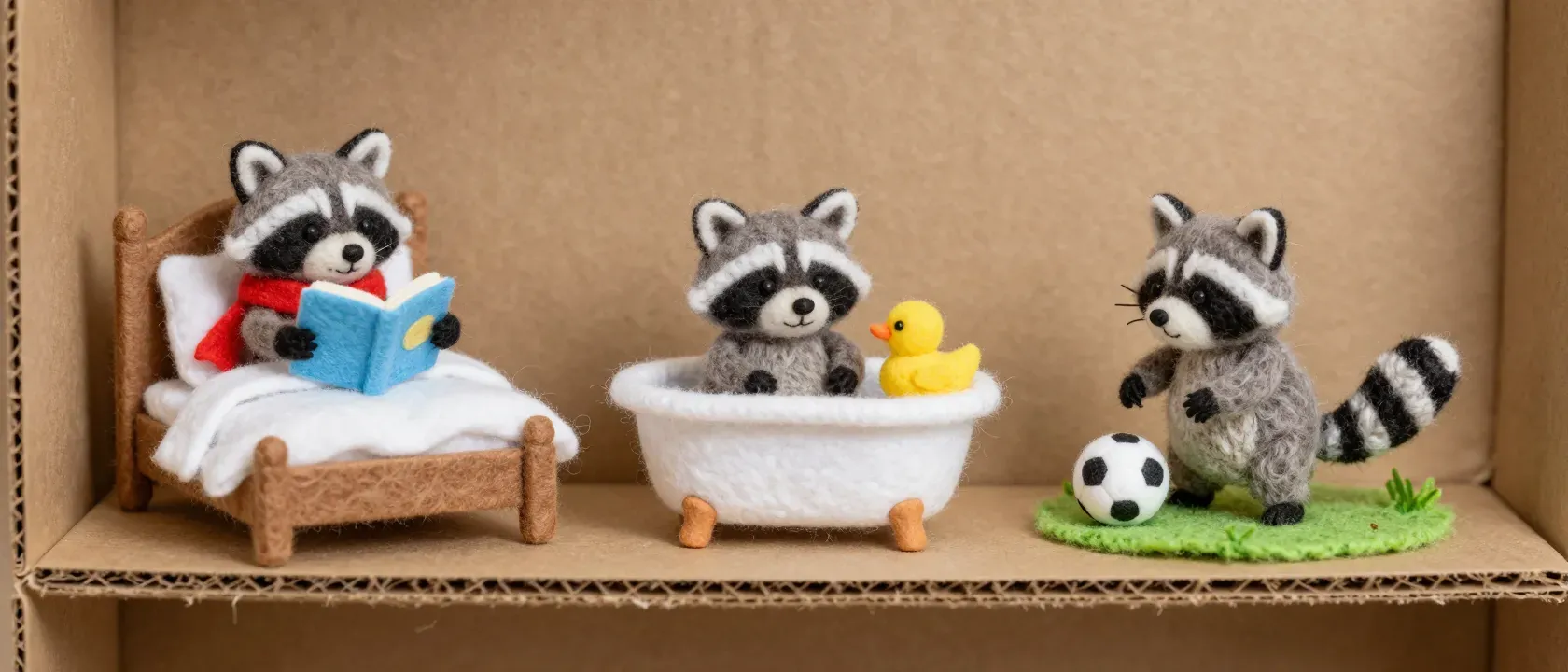
Books matter more than most parents expect, because picture books use words that never come up in daily conversation. Borrow or swap them with other families in your language, and read the same favorites over and over, which is what toddlers want anyway.
Reading in the home language doesn't cost the school language either. In a study of 33 preschoolers from Hmong and Spanish speaking families, storybook reading at home in the home language was at least as effective for learning English words as storybook reading at home in English (Roberts, 2008).
Give your child a reason to use it
Kids speak the languages they need, and speaking a language is part of how they get better at it. A study that followed 47 bilingual children from 2½ to 3½ found that the children who used English more grew faster in speaking it, even after counting how much English they heard, while understanding grew about the same (Ribot, Hoff and Burridge, 2017). A child who understands your language but never has to answer in it can end up understanding a lot and saying little.
A grandparent who only speaks the home language is the best teacher you've got, and regular video calls count: the American Academy of Pediatrics treats live video chatting with family differently from other screen use, even for babies. The lab work agrees. Toddlers of 2 to 2½ learned new verbs over Skype about as well as from a person in the room, and nothing from a recording of the same kind of lesson (Roseberry, Hirsh-Pasek and Golinkoff, 2013), and children of 12 to 25 months who had FaceTime chats recognized their partner a week later and learned from them, while children shown recorded videos didn't (Myers and colleagues, 2017). Playgroups, other families from your community and trips to places where the language is everywhere all make it real.
When your child answers in the community language, keep going in yours. Show you understood and reply in the home language, or repeat what they said back in it, without making it a rule or a punishment. Many families find that staying relaxed and consistent beats insisting.
Use screens the way you'd use a book
Screens can help a little, mostly when a grown-up is in on it. The World Health Organization recommends no sedentary screen time for children under two and no more than an hour a day for two to four year olds, and the AAP stresses watching and playing together.
The gap between a person and a recording is large for the youngest children. Nine-month-olds who spent about five hours over four weeks with a live Mandarin speaker learned to hear Mandarin sounds, while babies who got the same Mandarin from video or audio recordings showed no learning at all (Kuhl, Tsao and Liu, 2003). A meta-analysis of 59 reports puts the average learning gap between video and face-to-face teaching at about half a standard deviation for children up to six, shrinking as they get older (Strouse and Samson, 2020). Sitting with them changes the picture: toddlers whose parent joined in alongside a video learned the new word, and toddlers watching on their own didn't (Strouse and colleagues, 2018).
That's the idea behind LingoPlaytime. The games are short, they speak your home language in a natural-sounding voice and say your child's name, and they're meant to be played together: you tap, you both say the word, you point at the real thing in the room. Goodnight room even ends on its own, so the last game of the day leads into bed instead of another round. More on this in what toddlers actually learn from screens.
And if your child is mixing languages or seems slow to talk in the meantime, here's what the research says about bilingual toddlers and late talking.
Questions parents ask
My child understands our language but answers in the community language. What should I do?
This is very common once daycare starts. Keep speaking your language, reply in it, and add moments where the child needs it, such as calls with grandparents or playdates with families who speak it. Children who use a language more tend to grow faster in speaking it, so a reason to talk matters as much as listening.
Will keeping the home language slow down the local language?
The research says no. A review of 42 studies found no case where more home-language exposure held back children's majority language, and reading at home in the home language helped preschoolers learn English words as well as reading in English did.
Can apps or videos keep a home language alive?
They can help a little, mainly when a parent plays or watches along. Young children learn far less from recordings than from people, and the WHO recommends no sedentary screen time under two and at most an hour a day for two to four year olds.
What if only one parent speaks the home language?
That parent's time with the child matters most, so protect regular moments in the language. The other parent can support it by joining songs and games and treating the language as part of family life.
Do video calls with grandparents count?
Yes. In experiments, toddlers learned new words over live video chat but not from recorded video, and the American Academy of Pediatrics treats video chatting differently from other screen use even for young children.
Sources
- Parental language input patterns and children's bilingual use, Annick De Houwer, Applied Psycholinguistics, 2007
- The languages you speak to your bilingual child, François Grosjean, Psychology Today, 2014
- Early experience is not enough: evidence from differences between heritage and host language trajectories, Heather Johnson and Erika Hoff, Developmental Psychology, 2026
- Can family language policy predict linguistic, socio-emotional and cognitive child and family outcomes? A systematic review, Ily Hollebeke, Esli Struys and Orhan Agirdag, Journal of Multilingual and Multicultural Development, 2020
- Older sibling influences on the language environment and language development of toddlers in bilingual homes, Kelly Bridges and Erika Hoff, Applied Psycholinguistics, 2014
- Sources of individual differences in the dual language development of heritage bilinguals, Johanne Paradis, Journal of Child Language, 2023
- Home storybook reading in primary or second language with preschool children, Theresa Roberts, Reading Research Quarterly, 2008
- Language use contributes to expressive language growth: evidence from bilingual children, Krystal Ribot, Erika Hoff and Andrea Burridge, Child Development, 2017
- Skype me! Socially contingent interactions help toddlers learn language, Sarah Roseberry, Kathy Hirsh-Pasek and Roberta Golinkoff, Child Development, 2013
- Baby FaceTime: can toddlers learn from online video chat?, Lauren Myers and colleagues, Developmental Science, 2017
- Foreign-language experience in infancy: effects of short-term exposure and social interaction on phonetic learning, Patricia Kuhl, Feng-Ming Tsao and Huei-Mei Liu, PNAS, 2003
- Learning from video: a meta-analysis of the video deficit in children ages 0 to 6 years, Gabrielle Strouse and Jennifer Samson, Child Development, 2020
- Co-viewing supports toddlers' word learning from contingent and non-contingent video, Gabrielle Strouse and colleagues, Journal of Experimental Child Psychology, 2018
- To grow up healthy, children need to sit less and play more, World Health Organization, 2019
- Media and young minds, American Academy of Pediatrics, Pediatrics, 2016
Keep reading
Can toddlers learn a language from videos, apps and video calls?
What experiments show about babies and toddlers learning language from video, audio, apps and video calls, and how sitting with your child changes what they learn.
Is my bilingual toddler a late talker? What the research says
Worried your bilingual toddler is talking late or mixing languages? Research shows bilingualism doesn't cause speech delays. How to count words across languages, and when to get help.